Temperature: Cold, dressed à la minute
Where: Cevichería
Price range: S/35–55
What it is
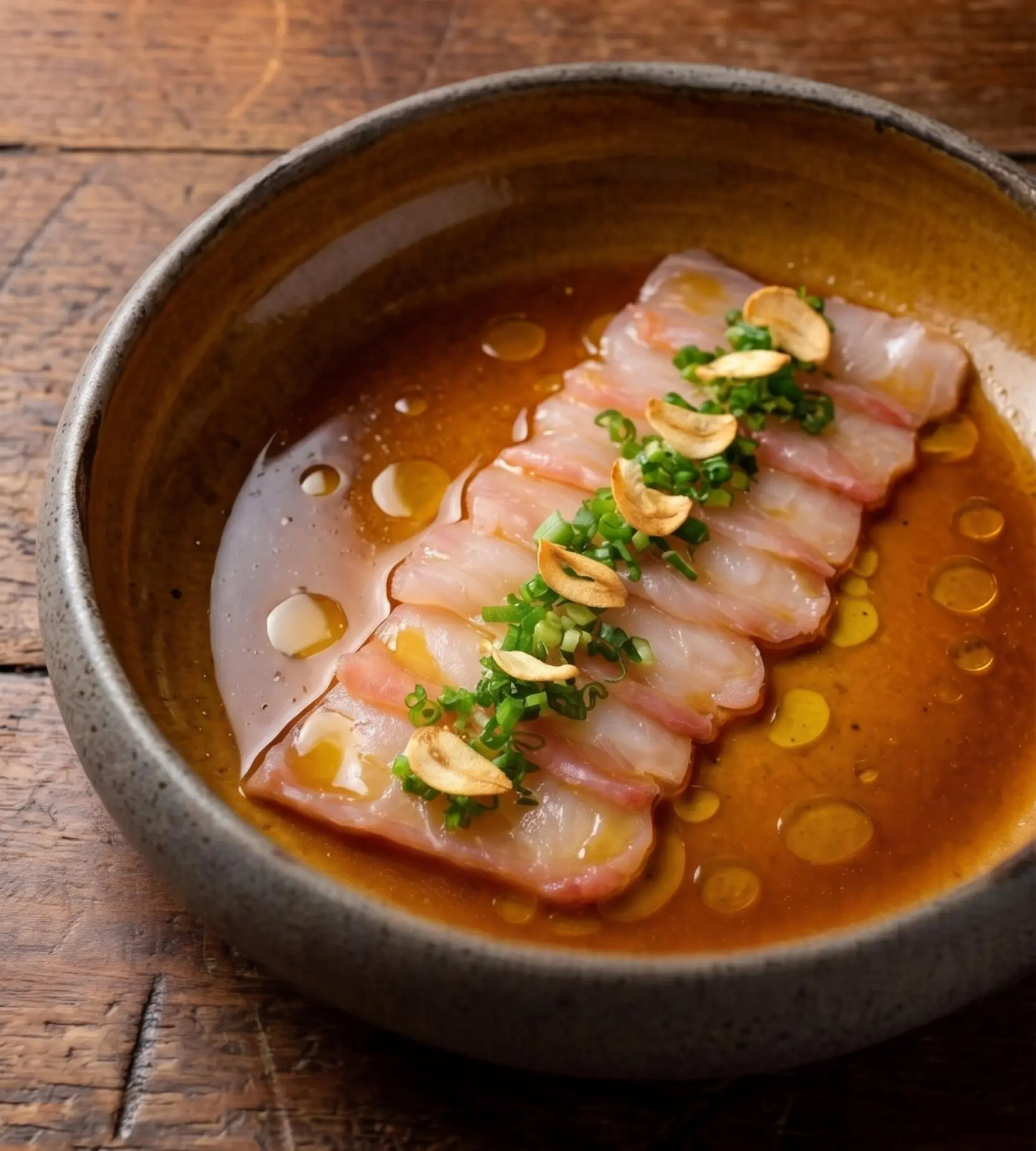
Tiradito uses the same raw white fish and the same leche de tigre as ceviche (lime, ají, fish stock, garlic and onion juice), but the fish is cut and served differently. Ceviche is cubes marinated for a few minutes with onion. Tiradito is thin slices, fanned out like sashimi and dressed just before they reach the table, and it never has onion.
Because the slices are thin and the lime only touches them for seconds, the fish stays almost raw and translucent. The ají goes on top, in dots or as a glaze: yellow, rocoto or limo, depending on the version. There's usually no choclo or camote on the plate, just the fish, the sauce and a little cilantro.
Why order it
It tastes lighter and sharper than ceviche, and it's a good way in for someone who finds ceviche too oniony. Many cevicherías serve the two as a dúo, one of each on the same plate.
How to order it
Ask for "un tiradito clásico, por favor". The versions you'll see:
- Tiradito clásico: corvina or lenguado with ají amarillo. The default, around S/35–55.
- Tiradito al rocoto: the same fish with rocoto, hotter.
- Tiradito al olivo: in an olive and leche de tigre sauce, dark and rich.
- Tiradito nikkei: with soy, sesame oil and ginger.
- Tiradito de pulpo: octopus instead of fish, often al olivo.
Like ceviche, it's a lunch dish. Cevicherías buy the morning's fish and most close by late afternoon; if you order it at dinner, ask what came in that day.
What it costs
| Where | Tiradito (S/) |
|---|---|
| Menú del día | 18–28 |
| Mid-range cevichería (Punto Azul, Pescados Capitales) | 38–55 |
| Upmarket cevichería (La Mar, El Mercado) | 55–80 |
| Nikkei high-end | 90–150 |
At the same restaurant it usually costs a little more than ceviche, because of the slicing and the better cut of fish.
Eating it
Each slice is meant to be one bite, and the leche de tigre is already balanced, so there's no need to add more. Chicha morada, a Sauvignon Blanc, a pisco sour or a beer all go with it. Red wine doesn't.
Where to try it
- La Mar, Av. La Mar 770, Miraflores. The best known; order the tiradito al olivo. Lunch only.
- Punto Azul, Calle San Martín 595, Miraflores. Mid-range, generous portions.
- El Mercado, Miraflores. Rafael Osterling's place, with a courtyard.
- Pescados Capitales, Av. La Mar 1337, Miraflores. Mid-range, with a classic tiradito al rocoto.
- Maido, Calle San Martín 399, Miraflores. Nikkei tasting menu only; book well ahead.
- Al Toke Pez, Av. Angamos Este 886, Surquillo. Tomás Matsufuji's lunch-only counter.
Where it comes from
The tiradito served today is mostly a Lima nikkei dish of the 1960s and 70s. It's most often credited to Humberto Sato, whose cevichería Costanera 700 opened in 1974 and fixed the sashimi cut that sets it apart from ceviche. The name comes from tirar, "to throw" or "to lay out", after the slices laid out in a fan.
Older Limeños say thin-sliced fish in lime was eaten on the coast long before that. Both can be true: the dish joins coastal Peruvian cooking with the sashimi technique that Japanese immigrants brought after the Sakura Maru arrived in 1899. More on that cuisine in Nikkei; on the restaurants that serve it, in Cevichería.