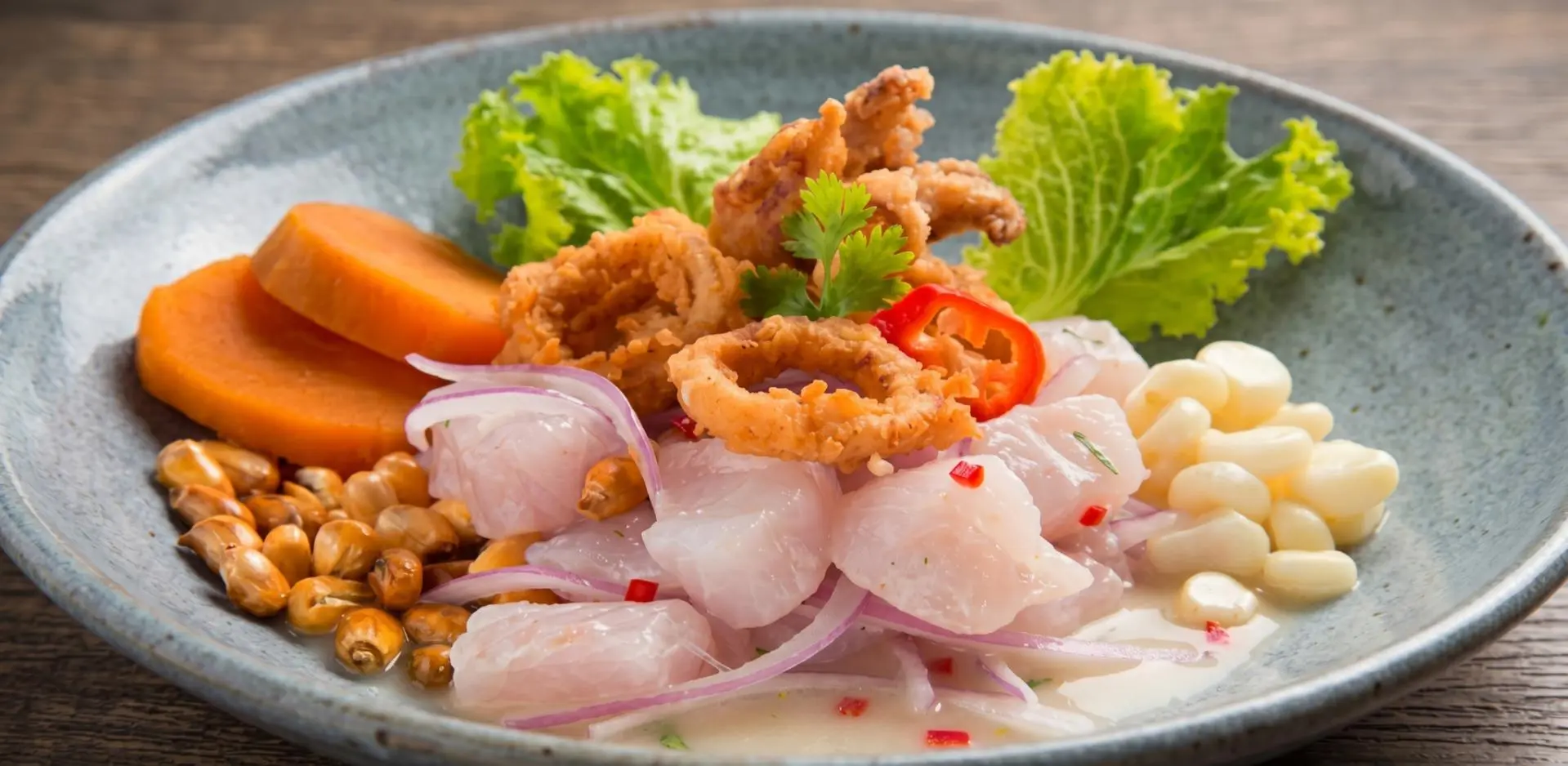
Temperature: Cold
Where: Cevichería
Price range: S/18–110
Raw fish, lime, onion, chili
Ceviche is fresh raw fish "cooked" by the acid in lime juice, tossed with salt, sliced red onion and Peruvian chili. In Lima it's served cold, almost always at lunch, with a slice of camote (sweet potato) and a few kernels of giant choclo corn on the side.
That's it. No avocado, no mango. A Limeño judges a ceviche on three things: how fresh the fish is, how balanced the leche de tigre (the lime, chili and fish juice at the bottom of the plate) tastes, and how recently it was tossed.
Why Limeños won't eat it at night
The rule that matters most: eat ceviche at lunch, not dinner.
Lima's fishermen come in at dawn. Cevicherías buy that morning's catch and serve it through lunch, roughly 12:00 to 16:00. After that, whatever's left has spent hours in a fridge, and a place still selling "fresh ceviche" at 9pm is either freezing fish or cutting corners.
One more test: if a cevichería is empty at 13:30 on a weekday, walk on. Locals know which spots are fresh, and they all eat at the same hour.
Clásico, mixto, or a glass of leche de tigre
The default is ceviche clásico (or ceviche de pescado): white fish, usually corvina, lenguado (sole) or fonda. Beyond that:
- Ceviche mixto adds calamari, octopus and shrimp to the fish.
- Tiradito: sashimi-style slices, no onion, under an ají amarillo or rocoto cream.
- Leche de tigre, a small glass of the marinade served straight. Locals swear by it for hangovers.
Drink chicha morada (the purple corn drink) or a cold Cusqueña.
What a plate costs in 2026
| Where | Plato (S/) |
|---|---|
| Local huarique (Surquillo, Chorrillos) | 18–28 |
| Mid-range cevichería (San Isidro, Magdalena) | 35–55 |
| Upscale (Miraflores, Barranco) | 60–110 |
Under S/15, be suspicious. Over S/120, you're paying for the view.
Your first one
Start at a no-frills cevichería in Surquillo, Magdalena or Chorrillos, working neighborhoods where the customers are locals who eat ceviche every week. For a more polished plate, Barranco and Miraflores both have classic cevicherías near the cliffs.
Just don't have your first ceviche at the airport, at a hotel buffet, or anywhere with a photo menu in five languages.
Two thousand years of curing fish
Ceviche is older than Peru. The Moche and Chimú, on what's now the Peruvian coast, cured raw fish in fermented chicha and tumbo, a sour local fruit, more than 2,000 years ago. The Spanish brought limes and onions in the 16th century, and the dish settled into roughly its current form in the 19th. Peru declared it national cultural heritage in 2004, and June 28 is the Día Nacional del Cebiche. The Lima version, with its short marination, white fish, sweet potato and choclo, is the one cevicherías abroad copy.
Is it safe on day one?
At a reputable cevichería, generally yes: lime acid, high turnover and fresh fish keep the risk low. Your stomach is still meeting a new set of bacteria, though, so on the first day stick to busy places at lunchtime. Our guide to food safety in Lima has the rest.