What is a carretilla
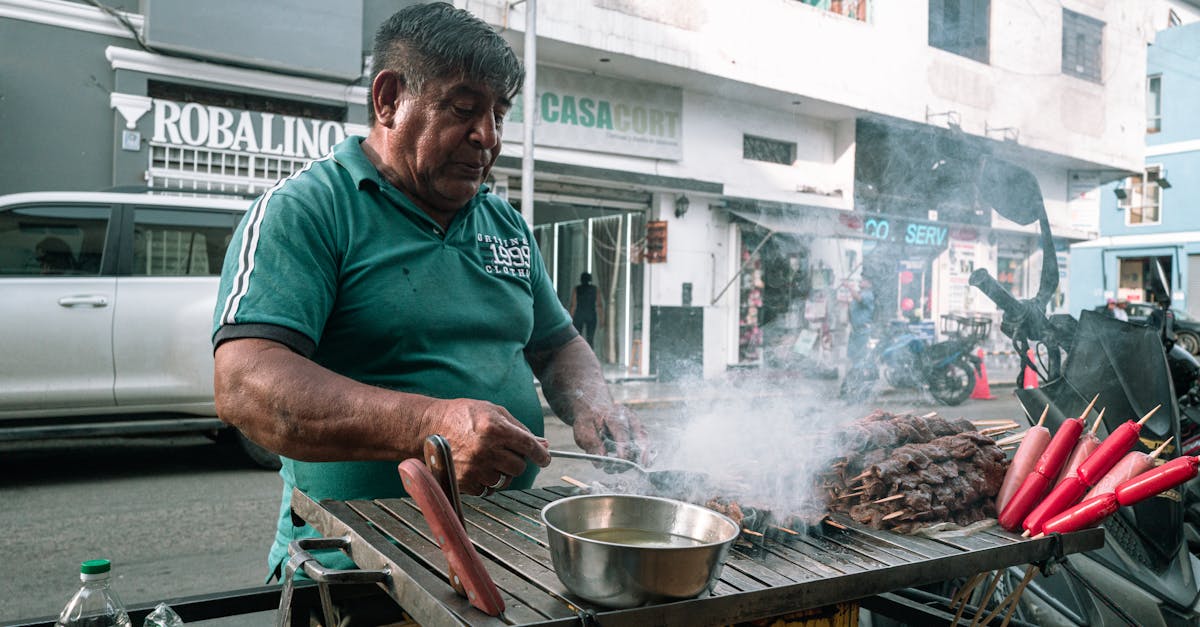
A carretilla is a Lima street food cart. The word literally means "small cart" — a wheeled, often hand-pushed wooden or metal stand that someone (the carretillero/a) parks on the same corner, the same hours, the same days, year after year. Carretillas are the most fragile and the most authentic layer of Lima's food landscape: no roof, no chairs, often no fixed address on the books, and yet some of them have been at the same lamppost for thirty years and feed three generations of the same families on the way to school or work.
A carretilla is not a food truck and not a huarique. The food truck is a recent import (post-2015), built for craft beer crowds and food festivals. The huarique is a tiny brick-and-mortar restaurant. The carretilla is older than both, runs on charcoal or a single gas burner, sells one or two things, and depends entirely on the carretillero/a showing up at the same place every evening.
The classic Lima carretilla sells one of these: anticuchos (beef-heart skewers off a charcoal grill), picarones (sweet potato and squash doughnuts), emolientes (hot herbal infusions, sold from a wheeled urn before dawn), tamales (sold from a covered basket on a small cart, mornings only), or choclo con queso (boiled giant corn with fresh cheese, afternoons in the parks).
Origins
Street vending in Lima goes back to the colonial period: 17th- and 18th-century travelers' chronicles describe Afro-Peruvian and indigenous women selling anticuchos, humitas, mazamorra morada and picarones from baskets and small charcoal braziers in the streets of Lima Vieja. The 1820s lithographs of Pancho Fierro — Lima's most famous costumbrista painter — show tamaleras, mazamorreras, and picaroneras pushing or carrying their wares through the same streets where carretilleras still work today. This is one of the oldest continuously practiced food trades in South America.
The format has changed only at the edges. Anticuchos were already being grilled on the street in the 1700s — historians point to Afro-Peruvian women in the Bridge district (Abajo el Puente, today's Rímac) as the originators of the modern beef-heart anticucho around the late 1700s, when enslaved cooks took the cuts the colonial households didn't want and turned them into a marinated, ají-panca-rubbed grill staple. Today's carretilla on Av. Grau works on the same principle: hot charcoal, the same marinade, served to passers-by.
The legal status of carretillas has always been precarious. The Municipalidad de Lima has run regularization campaigns since at least the 1980s, requiring carretilleros to register, pay a small fee, get health cards, and operate within designated zones. The biggest formal recognition came in 2007, when Peru's Ministry of Culture declared the Anticucho Patrimonio Cultural de la Nación — citing explicitly the "carretilleras y anticucheras" who have kept the tradition alive on the streets of Lima. Picarones got the same designation in 2014.
Two carretillas-turned-institutions worth knowing by name:
- Doña Pochita — anticuchos in Surquillo (Av. Angamos Este, near the market) since the 1970s. Granddaughter now runs the cart. Friday and Saturday nights from around 19:00.
- Picarones Mary — Av. La Marina, San Miguel. Founded in the early 1960s as a single carretilla, now a small sit-down restaurant — but the original cart still operates outside on weekends.
How to recognize one
Five reliable cues for a real carretilla, not a tourist-trap version:
- It's a wheeled cart, not a stand or stall. The whole thing can be pushed. There may be a small folding table next to it for plates and a couple of plastic stools, but the heart of the operation is the cart.
- Charcoal smoke or steam, depending on what they sell. Anticucheras have a visible bed of glowing charcoal. Picaroneras have a deep iron pan of bubbling oil. Emolienteras have a metal urn with a brass spout.
- Locals are queueing. The carretilleras everyone trusts have a small cluster of regulars who know the schedule. If you see three taxi drivers and an office worker waiting, that's the cart you want.
- Hours are fixed and narrow. Anticuchos: 19:00–23:00. Picarones: 17:00–22:00. Emolientes: 05:00–08:00. Tamales: 06:00–10:00. A "carretilla" open all day is probably something else.
- One thing, done well. A real carretilla sells anticuchos or picarones or tamales. Not all of the above.
What you'd order
The carretilla canon, by category:
Anticuchos (the most common Lima carretilla):
- Anticuchos de corazón — three beef-heart skewers, boiled potato halves on the side, choclo (giant corn) on the side, a smear of ají amarillo and ají panca cream. The classic order. S/12–20.
- Pan con anticucho — the same skewers slid off the stick into a pan francés, with salsa criolla. A walk-and-eat order. S/8–14.
- Mollejitas / rachi — chicken gizzards or grilled tripe. For the curious. S/10–16.
- Choncholí — grilled marinated cow intestines. The deep-cut option. S/10–18.
Picarones:
- Picarones — five or six freshly fried doughnut rings (sweet potato + squash dough), drizzled generously with miel de chancaca (raw cane syrup with fig leaf and orange peel). S/8–15 per portion.
Emolientes (pre-dawn carts):
- Emoliente clásico — hot tea of barley, alfalfa, cola de caballo, llantén, lime juice. Drunk standing, before sunrise. S/2–4.
- Quinua — hot quinoa drink with cinnamon, apple, lime. S/3–5.
- Maca — Andean root, sometimes with maracuyá. S/3–5.
Tamales (morning carts):
- Tamal limeño — corn dough with pork and olive, wrapped in banana leaf, served with raw onion + ají. S/5–8.
- Humita — sweeter version, sometimes with cheese. S/4–7.
Choclo con queso (afternoon park carts, often near the malecón in Miraflores):
- Choclo con queso fresco — a half-cob of giant corn, boiled, with a slab of queso fresco. S/6–10.
Price range
| Carretilla type | Per portion (S/) | Notes |
|---|---|---|
| Emoliente | 2–5 | Pre-dawn, cash only |
| Tamales | 4–8 | Morning, cash, sometimes Yape |
| Choclo con queso | 6–10 | Afternoons in parks |
| Picarones | 8–15 | Evenings, cash |
| Anticuchos | 12–20 (per portion of 3 skewers) | Evenings, increasingly Yape |
Carretillas are almost universally cash-first. A growing number now have a Yape QR code taped to the cart (Peru's mobile-payment app), but bring small bills (S/10, S/20) — change is real and a S/100 note will get a polite refusal.
Real examples in Lima
A short list of carretillas that have earned their reputation. Note that street carts can move, change owners, or stop appearing — verify on the day, ask a local, and have a backup.
- Anticuchos Grimanesa Vargas — Pasaje Enrique Palacios 110, Miraflores. Founded 1978 as a carretilla on the corner of the same street, eventually moved indoors to a small space (now a sit-down restaurant) but kept the open grill at the door. Grimanesa is the most internationally famous anticuchera in Lima — Anthony Bourdain filmed here in 2013.
- Doña Pochita — Av. Angamos Este (near Mercado de Surquillo), Surquillo. Friday/Saturday nights, anticuchos from around 19:00. The cart is still wheeled out and parked on the same corner.
- Picarones Mary — Av. La Marina with Av. Universitaria, San Miguel. Original cart on weekends; sit-down branch year-round. From early 1960s.
- Anticuchos del Parque Kennedy — informal carts that set up on the Parque Kennedy edges in Miraflores, Friday–Sunday from around 19:30. Mixed quality; pick the busiest one.
- Picarones at the Parque de las Aguas (Circuito Mágico del Agua, Cercado de Lima) — weekend afternoons. Family operation, served hot and crisp.
- Emolienteras at Av. Larco / Av. Pardo corners (Miraflores) — pre-dawn, 05:30–08:00. The cart with the metal urn and the brass spout. S/3 a cup.
A note on safety
Street food in Lima is generally safe if you follow the rules described in our street food safety guide. For carretillas specifically, the high-heat formats (anticuchos grilled to char, picarones fried in 180°C oil, emolientes brewed at boiling) are intrinsically lower-risk than the cold or room-temperature formats. The marginal risks are usually the plates and forks (look for disposable or freshly washed) and the salsa bowls that sit out for hours (skip uncooked sauces if you're worried).
Eat the anticuchos that come straight off the grill onto your plate. Eat the picarones that the picaronera lifted out of the oil thirty seconds before. Drink the emoliente while it's still steaming. The carretilleros who have been on the same corner for twenty years know more about food safety than most restaurants.
Related
- Anticuchos — the dish that defines the evening carretilla.
- Street food safety — the broader guide.
- Huarique — the brick-and-mortar cousin.
- Sanguchería — many sandwich shops started as carretillas.
- Cevichería — the format that street vending cannot do safely.
- Breakfast in Lima — emoliente and tamal carts before sunrise.