Temperature: Hot, served immediately
Where: Carretilla / picaronería
Price range: S/8–25
What they are
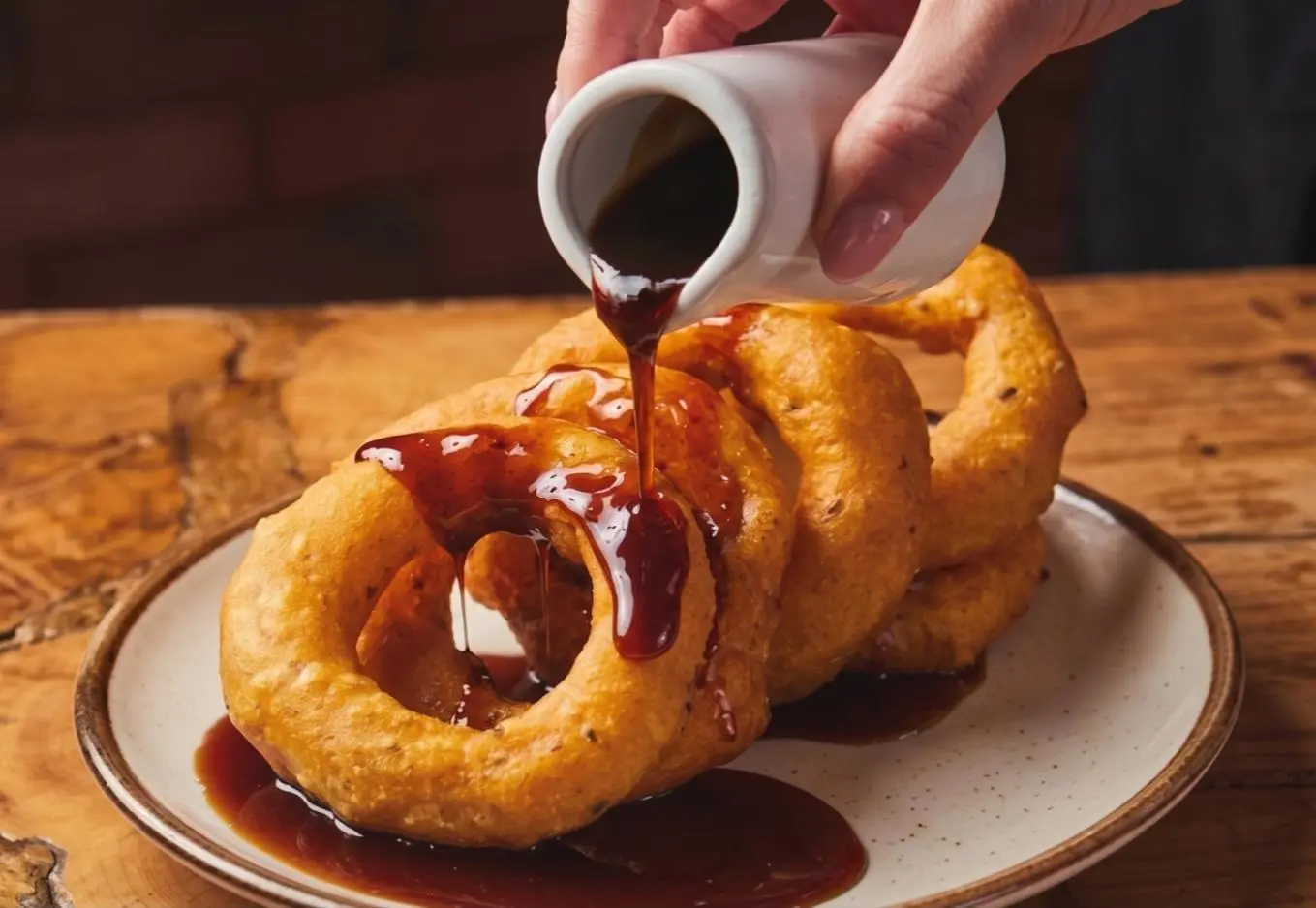
Picarones are rings of yeasted dough made with mashed sweet potato and squash (camote and zapallo loche or macre). They're fried until the outside is crisp and amber and the inside stays soft, then covered in miel de chancaca, a syrup of unrefined cane sugar boiled with fig leaves, orange peel, cloves and cinnamon. The squash and sweet potato make them denser than a doughnut, and the syrup is less sugary than it looks.
A portion is usually 5 to 7 rings on a small plate. They're fried to order and eaten straight away, with a fork or with your fingers.
Why try them
They're the Peruvian dessert you're least likely to find done well abroad, because they belong to the street: the picaroneras who fry them in a single deep iron pan, in the late afternoon. Since they're fried at high heat and served at once, they're also one of the easier street foods on a new stomach. Pick a cart with locals waiting.
How to order
Ask for "una porción de picarones, por favor". The options:
- Porción regular, 5 to 7 with chancaca, S/8–15.
- Porción doble, 10 to 12, for two, S/14–25.
- Con helado, with vanilla ice cream, only at sit-down places like Picarones Mary, S/15–25.
- Chancaca aparte if you want the syrup on the side.
Street carts work from about 17:00 to 22:00, cash only, around S/8–12 a portion. Sit-down picaronerías charge S/12–18, and some criollo restaurants serve them after lunch for S/12–22, often fried ahead of time.
One thing to watch: a picaronera shapes each ring by hand, swirling the dough and dropping it into the oil between thumb and forefinger. Rings taken ready-made from a tray are a shortcut.
What they cost
| Where | Portion (S/) |
|---|---|
| Street cart (carretilla) | 8–12 |
| Sit-down picaronería (Mary) | 12–18 |
| Criollo restaurant dessert | 14–25 |
| Hotel restaurant version | 25–45 |
Eating them
Eat them right away, before the syrup soaks into the bottom ones, and turn them in the syrup as you go. They're heavier than they look, so one portion each is plenty. If you want something to drink, café pasado or té piteado (tea with pisco).
Where to try them
- Picarones Mary, Av. La Marina 4801, San Miguel. Started as a street cart in the early 1960s and is now a small restaurant; the cart still works outside on weekends.
- Parque de las Aguas (Circuito Mágico del Agua), Cercado de Lima: family carts on weekend afternoons.
- Parque Kennedy, Miraflores, Friday to Sunday evenings. Quality varies, so go to the busiest cart.
- Bajada de los Baños, Barranco, especially on Sunday afternoons.
- Neighborhood carts in Surquillo and Lince after 17:00, mostly Wednesday to Sunday.
More on the carts in Carretilla.
Where they come from
Picarones are a colonial Lima dessert. The Spanish brought buñuelos, fritters from Andalusia; local cooks made them with two old Andean foods, sweet potato and squash, which gave a denser, sweeter, orange fritter. Afro-Peruvian cooks in colonial Lima shaped the recipe and paired it with chancaca syrup. In the 1820s the painter Pancho Fierro was already drawing picaroneras selling them in the streets.
Peru's Ministry of Culture declared them Patrimonio Cultural de la Nación in 2014, and the second Sunday of October is observed as their national day.