What is a pollería
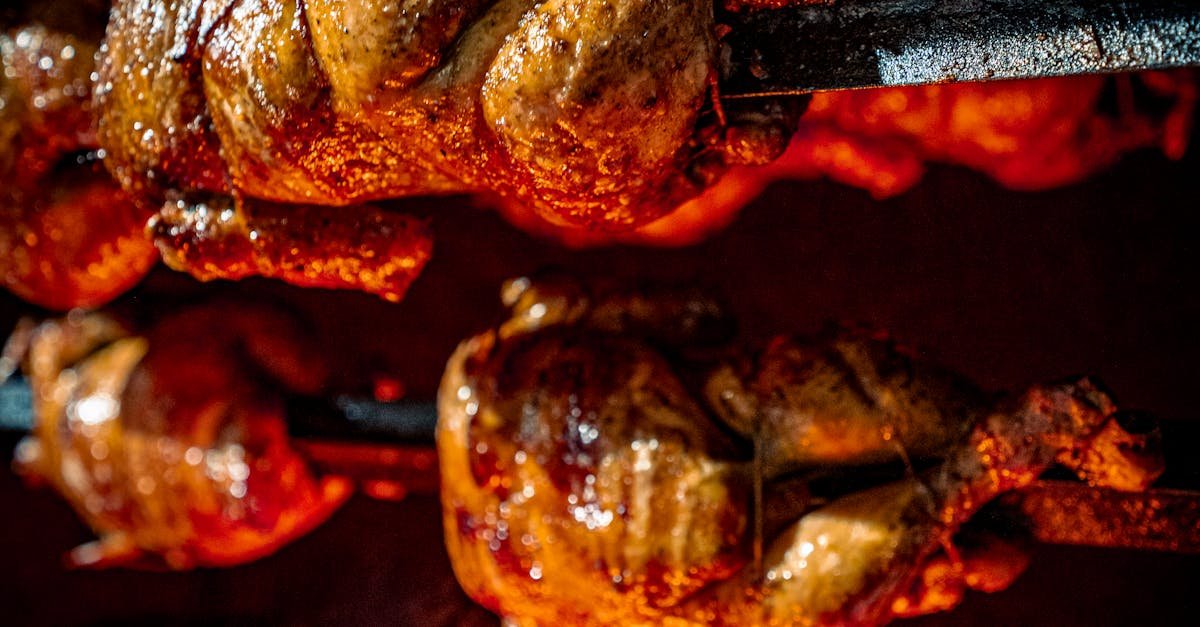
A pollería is a restaurant built around one dish: pollo a la brasa, the spit-roasted, charcoal-fired chicken that is, by volume, the single most-eaten restaurant meal in Peru. The format is precise: a vertical rotisserie (the rocoto) loaded with whole marinated chickens turning over wood embers, served by the quarter / half / whole bird with French fries, a small green salad, and three or four sauces — ají amarillo, huacatay (mint-cilantro), rocoto, and mayonnaise — often refilled at the table without asking.
It is the closest thing Peru has to a national restaurant chain category. Every district has at least one. Most have ten. The bigger chains (Norkys, Roky's, Rocky's, Pardo's Chicken) operate hundreds of branches between them; the independents number in the thousands. The third Sunday of July is the official Día Nacional del Pollo a la Brasa, declared by the Peruvian government in 2010.
A pollería is family food, weeknight food, post-football food, birthday-with-cousins food. It is, for most Limeños, the default answer to "¿qué cocinamos hoy?" on the day no one wants to cook.
Origins
Pollo a la brasa was invented in 1950 in Chaclacayo, a town just east of Lima, by a Swiss restaurateur named Roger Schuler. Schuler ran a small restaurant called La Granja Azul, where he served chickens roasted in front of the dining room — first one or two at a time, on a horizontal spit. As demand grew, his Swiss mechanic friend Franz Ulrich designed a vertical rotisserie capable of cooking up to eight birds simultaneously over wood embers. That machine, the rocoto (named after the chili because of its color and shape), is still the standard pollería oven across Peru today.
For the first two decades, pollo a la brasa was upper-class food — La Granja Azul was a destination restaurant for Lima's elite, with linen tablecloths and live music. The Schuler family held a patent on the rotisserie until the 1970s, when it expired and pollerías exploded across the country. By the 1980s the dish had migrated fully into mass-market territory; by the 1990s the big chains (Norky's founded 1976, Roky's 1985, Pardo's Chicken 1986) had built the multi-branch model that dominates the category today.
In 2004 Peru declared pollo a la brasa part of its Patrimonio Cultural de la Nación. The Ministry of Production estimates that Peruvians eat over 130 million pollos a la brasa per year — roughly four per person.
How to recognize one
Five visual cues, present in 90% of pollerías:
- The rocoto rotisserie is visible from the street, often through a glass front, with the chickens spinning over orange embers. This is the marketing.
- A red and yellow color scheme, almost always. The chains drilled this association into the national consciousness so hard that even independents copy it.
- Plastic-laminated menus with combos: 1/4 pollo, papas, ensalada, gaseosa (S/22–32 in 2026).
- Promo combos for groups: pollo entero + 4 vasos de Inca Kola + papas familiares. The "family pack" is a category.
- Always open for dinner. Unlike most other Peruvian restaurant types (cevicherías, criollas, huariques), pollerías are a 17:00–23:00 institution. Lunch service exists but isn't the focus.
What you'd order
A first-time pollería order, almost universal:
- Un cuarto de pollo con papas y ensalada — quarter chicken, French fries, small salad. The default. S/22–35 depending on the tier. Specify pierna (leg) or pecho (breast); leg is universally considered better.
- Medio pollo for two people sharing, or a person who's been outdoors all day.
- Pollo entero for a group of 3–4. Often comes with a familiar portion of fries and a 1.5L drink.
- Cremas — the sauces, refilled freely. Try all four.
- Inca Kola — the bright-yellow national soda, almost mandatory. Many Limeños will tell you pollo a la brasa without Inca Kola is incomplete.
- Chicha morada — the non-soda alternative; better with food.
Side note: real pollerías do mostaza casera (house mustard) too, often the best of the four sauces. Ask for it if it doesn't appear.
Price range
| Tier | 1/4 pollo + sides + drink (S/) | Whole bird w/ extras (S/) |
|---|---|---|
| Barrio pollería | 22–32 | 65–95 |
| Mid-range chain (Norky's, Roky's) | 28–40 | 85–130 |
| Pardo's Chicken (premium chain) | 35–55 | 110–160 |
| Upscale wood-fired (La Granja Azul, Las Cañitas) | 45–70 | 140–220 |
Anything under S/18 for a quarter chicken meal is suspicious. Anything over S/250 for a whole bird is paying for the room.
Real examples in Lima
- La Granja Azul — Carretera Central km 11, Ate. The original. Founded 1950 by Roger Schuler. Now a destination restaurant with a pool and big grounds for family Sundays. The history is the value; the food is good but no longer the best in the city. Around S/55–80 per person.
- Las Cañitas — Av. Reducto 1300, Miraflores. The polished local favorite. Genuinely excellent wood-fired bird, dark crispy skin, sauces taken seriously. Around S/45–65 per person.
- Pardo's Chicken — multiple locations (Av. Benavides in Miraflores is the easiest from a hotel). The most reliable chain. Slightly more expensive than Norky's but consistently better. Around S/35–50 per person.
- El Buen Sabor — Av. Javier Prado, La Victoria. Classic barrio pollería without the chain polish. Around S/22–32 per person.
When to go
Pollería is dinner food. The kitchen warms up around 17:00 and peaks 19:30–22:00. Going for lunch is fine but means smaller crowd and slightly less freshness on the spit (a chicken that's been turning since 11:00 is tired by 14:00).
Sundays are the day. Family lunch tradition, especially in working-class districts. Lines at famous spots (Las Cañitas, Pardo's flagships) form by 12:30. Tuesdays are the slowest day in most cities — pollerías honor this with promos: "Martes de pollo a S/29" is the standard.
Common chain map
| Chain | Founded | Branches | Reputation |
|---|---|---|---|
| Norky's | 1976 | 90+ | The cheapest of the big three. OK food, never great. |
| Roky's | 1985 | 80+ | Mid-tier. Slightly better than Norky's, slightly cheaper than Pardo's. |
| Pardo's Chicken | 1986 | 30+ | The premium chain. Best chain bird and the only one most travelers remember. |
| Rocky's | 1992 | 50+ | Indistinguishable from Roky's to most people; not the same company. |
For a first-time visitor, Pardo's Chicken on Av. Benavides is the safe high-quality choice; Las Cañitas if you want to upgrade once.
Related
- Pollo a la brasa — the dish itself, in full detail.
- Anticuchos — the other charcoal-fired Lima dinner classic.
- Chifa — the other ubiquitous neighborhood restaurant format.
- Miraflores food guide — Pardo's Benavides + Las Cañitas Reducto.
- How to order food in Lima — phrases for cuarto/medio/entero and the cremas.